

Aug
Breathtaking temples, lush jungles, picturesque rural villages, tropical beaches, and a wealth of culinary surprises await you on this 2-week Cambodia itinerary. In this blog post, I’ll take you on an exciting 14-day journey through the enchanting Cambodia.
This remarkable Southeast Asian country is often overshadowed by its more famous neighbors. However, don’t be misled. Beneath its modest exterior lies a true treasure trove of culture, history, and nature. This is precisely what attracted us. Together with Jan, we spent two weeks exploring the country, eager to uncover the hidden gems Cambodia has to offer.
So get ready for a journey of discoveries, where every place reveals something special and every encounter offers a chance to experience the authentic charm of Cambodia.
Disclaimer: This blog post contains interesting affiliate links. This means that if you purchase something through my recommendations, I receive a small reward. The best part? It doesn’t cost you anything extra and it helps my blog continue to grow. A win-win situation, so thank you!
About Cambodia
There are some common misconceptions about Cambodia, and I’m incredibly glad I never paid attention to them. Otherwise, I would have never discovered this beautiful country. That’s why I feel it’s my mission to dispel these myths and show you Cambodia as I experienced it.
Cambodia is dangerous
One of the biggest misconceptions is that Cambodia is dangerous due to its history with the Khmer Rouge. Many people still associate the country with the atrocities of the Pol Pot regime. While Cambodia indeed has a tragic past, today it is a relatively safe destination for tourists. The Cambodian people are extraordinarily friendly, welcoming, and very honest.
Cambodia is only a destination for backpackers
Another misconception is that Cambodia is only suitable for backpackers and budget travelers. I’m neither of those. I travel with a suitcase and enjoy staying in charming boutique hotels. And yes, Cambodia offers that too! You’ll find beautiful luxury resorts, atmospheric boutique hotels, and of course, more affordable options like guesthouses and hostels. Moreover, you can enjoy fine dining and unique experiences for travelers with a more generous budget. We traveled for 14 days through Cambodia with two large suitcases, and it was perfectly doable. The fact that Cambodia is also cheaper than many European destinations is a bonus, as you can enjoy a lot of luxury for a friendlier price. That’s something I wouldn’t say no to.
Angkor Wat is the only interesting thing in Cambodia
Finally, many people think there’s nothing to do in Cambodia besides visiting Angkor Wat. Often, Cambodia is only seen as part of a larger Southeast Asia trip, with a focus on the famous Angkor temple complex. While Angkor Wat is undoubtedly a must-see, Cambodia has so much more to offer. Think of beautiful beaches, pristine nature parks, vibrant cities, and a rich cultural tradition.
Is traveling to Cambodia worth it?
In short, I find Cambodia a fantastic destination that you can easily visit on its own, without needing to combine it with other countries. If you only have two weeks to travel, Cambodia is a top choice. You can see a lot and fully enjoy the unique culture of this special country.
Er bestaan enkele veelvoorkomende vooroordelen over Cambodja, en ik ben ontzettend blij dat ik hier nooit naar geluisterd heb. Anders had ik dit prachtige land nooit ontdekt. Daarom voel ik het als mijn missie om deze misvattingen uit de wereld te helpen en je Cambodja te laten zien zoals ik het heb ervaren.
The best time to travel around Cambodia
The best time to visit Cambodia depends on what you’re looking for in your trip.
If you want to enjoy pleasant weather and easy access to sights, the months from November to February are ideal. I was there in January, and the weather was fantastic! It was dry, with plenty of sunshine and mild temperatures between 20 and 30 degrees Celsius. Perfect for exploring temples and cities without sweating too much. Moreover, it’s a great destination to escape the cold winter months, with just the right amount of sun to warm you up.
If you love warmth and blooming landscapes, consider the spring from March to May. It can get hot, up to 35 degrees, but the floral beauty around Angkor Wat makes it well worth it.
For the adventurous traveler, the rainy season from June to October offers a different kind of beauty. The country transforms into a lush green paradise. Although it can rain heavily at times, the spectacular nature and tranquility are priceless.
How to travel to and in Cambodia?
Traveling from Belgium to Cambodia is easiest by plane. Unfortunately, there are no direct flights yet, so you’ll need to make a few connections, usually with a final stop in the bustling cities of Bangkok or Singapore. Be sure to account for a long travel time when planning your adventure.
Cambodia has two international airports, in Siem Reap and Phnom Penh, allowing you to plan your tour more efficiently. By arriving in Siem Reap and departing from Phnom Penh, we saved a significant amount of time on our Cambodia journey.
Driving in Cambodia is not recommended due to chaotic traffic and varying road conditions. Fortunately, bus transportation is well organized. With the platform 12go Asia, you can easily book bus, ferry, and other tickets, reserve seats, and pay in advance. This allowed us to arrange everything well in advance, saving us a lot of hassle on the spot.
For short trips within the various cities, Grab is a must-have. This app, similar to Uber, makes it super easy to book a ride. You know the price upfront, so you don’t need to negotiate with local drivers. This made our stay in Cambodia even more relaxed and enjoyable.
Want to know more about traveling around Cambodia, finding accommodations, paying, tipping, and other important things to plan your vacation? You can find all my tips in my blog post ‘10 Cambodia vacation tips you need to know before you go.’
Why do you need 2 weeks for a Cambodia trip?
Two weeks is the perfect duration for a tour of Cambodia because it allows you the freedom to explore the country in all its glory. You can thoroughly explore the majestic temples of Angkor Wat, experience the rich culture and history of Phnom Penh, and still have enough time to discover the countryside around Kampot or relax on the beautiful beaches of the Koh Rong islands.
In these two weeks, you can travel without rushing, enjoy breathtaking nature, be surprised by local markets, and savor the delicious Cambodian cuisine. It offers just the right balance between adventure and relaxation, giving you the chance to truly immerse yourself in the unique atmosphere of Cambodia. This way, you not only have time to see the highlights but also to enjoy the unexpected moments that make your trip unforgettable.
De ultimate 2-week Cambodia itinerary
You can find our Cambodia itinerary and the attractions we visited on this map. Let this route inspire you to create your own perfect journey through Cambodia. For each destination where we stayed, I have written a detailed travel guide. In this blog, I often refer to these guides. They will help you better prepare for your trip and make the most of your adventure in Cambodia.
4 days in Siem reap
After a long journey, we finally arrived in Siem Reap, where the charming Eightfold Urban Resort immediately captivated us with its tropical ambiance and lush greenery. The prices were so attractive that we decided to treat ourselves to a swim-up room, allowing us to dive straight into the pool from our terrace. This was a perfect way to relax after a day full of adventure.


Upon arrival, we immediately booked a refreshing Khmer massage at the hotel, an ideal way to shake off the fatigue from the long flight. This left us fully recharged and ready to start exploring the next day. Considering the travel time and jet lag, we had three full days to leisurely explore the beautiful sights in Siem Reap.
The temples of Angkor
Siem Reap is known as the gateway to the impressive Angkor, an expansive archaeological park filled with stunning temples, with Angkor Wat being the absolute highlight. With so much to see, it’s almost impossible to visit everything in one day. That’s why we decided to dedicate two full days to exploring the temples of Angkor.
You can purchase entrance tickets at the Angkor Ticket Office, just outside Siem Reap. This is an important first stop, as tickets are not available at the entrance to the park itself. You can choose between a 1, 3, or 7-day pass. We opted for the 3-day pass to fully enjoy the temples.
The best way to explore Angkor and its numerous temples is by tuk-tuk, bicyle, or organized tour We chose a tuk-tuk and paid about 20 euros per day. We found this a comfortable and affordable way to explore everything.
There are two popular routes you can follow: the small and grand temple tours. The small tour focuses mainly on the most famous temples like Angkor Wat, Ta Prohm, and Angkor Thom. The grand tour takes you to more remote and quieter temples like Preah Khan and Neak Pean. We did both.
The small temple tour
Since we started a bit later on the first day and still needed to pick up our tickets at the Angkor Ticket Office, we decided to begin with the small temple tour. However, don’t be misled by the name. This route takes you to the largest and most famous temples, where you will undoubtedly spend a lot of time. You’ll need a full day for this tour.
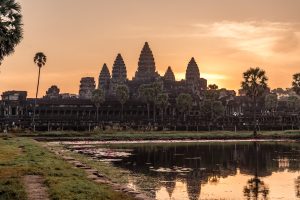
We began at the impressive Angkor Wat, the largest religious monument in the world and an absolute must-see.


Next, we visited Prasat Kravan, a charming temple with unique brick carvings.

We then explored Banteay Kdei, a beautiful complex with a serene, peaceful atmosphere, perfect for taking a breather.


One of the highlights of the day was Ta Prohm, also known as the “jungle temple.” The massive trees and roots intertwined with the ruins created a magical and mysterious experience that left us speechless.


Usually, you would conclude the small temple tour with a visit to the ancient Angkorian capital of Angkor Thom, but due to time constraints, we decided to postpone this until the next day.
Nevertheless, our first day provided us with a stunning introduction to the wonders of Angkor and a taste of the adventure that lay ahead.
The grand temple tour
On our second day, we woke up early for a sunrise at Angkor Wat. We met our tuk-tuk driver from the previous day, and our hotel prepared a breakfast picnic for us. Arriving at Angkor Wat in the dark, I was surprised by the crowd but found a perfect spot for my tripod. I was glad we arrived early, as it allowed us to take stunning photos. Despite the crowds, it was definitely worth it, especially for photography

Since we had already explored Angkor Wat the previous day, we headed straight to Pre Rup, an impressive temple mountain with breathtaking view


Next, we visited Banteay Samré, a beautifully restored temple in a peaceful location that exudes a serene atmosphere.


We then explored Eastern Mebon, famous for its elephant sculptures.


Afterward, we visited Ta Som, known for its iconic tree growing over the eastern gate.


Our journey continued to Neak Pean, a unique temple on a small island, surrounded by water.


We then arrived at Preah Khan, an extensive complex filled with hidden corridors and mystical ruins that create a fascinating atmosphere.


Finally, we arrived at Angkor Thom, the ancient capital of the Khmer Empire. Here we admired the imposing Bayon Temple, known for its 54 towers with mysterious, smiling faces.


We also explored the Baphuon Temple, an impressive pyramid-shaped structure that was once the largest in Angkor Thom. A short walk brought us to Phimeanakas and the Royal Palace, where we admired the beautiful Terrace of the Elephants and the Terrace of the Leper King.


To top it off, we saw many monkeys in Angkor Thom, including adorable newborns, which were, of course, a sight in themselves.


Exploring Siem Reap
On our last full day, we decided to take it easy and discover the charm of Siem Reap itself. We started with a visit to Artisans Angkor, where you can take a guided tour for a voluntary donation and watch talented artisans at work. It was impressive to see them weaving silk, carving wood and stone, and creating beautiful lacquerware and paintings. The tour gave us a fascinating behind-the-scenes look and allowed us to experience the magic of traditional Cambodian craftsmanship. It was a perfect way to appreciate the rich culture and traditions of the country.


If you want to dive deeper into the fascinating history and culture of the Khmer Empire, the Angkor National Museum in Siem Reap is an absolute must-visit. If you’re more curious about Cambodia’s turbulent history, consider a visit to the Cambodia Landmine Museum.

After our cultural adventure, we headed to the Old Market, where we enjoyed a quick local snack and then searched for unique souvenirs. The Old Market (Phsar Chas) turned out to be a treasure trove of narrow aisles filled with fresh produce, handmade goods, colorful clothing, and fragrant Cambodian spices. We tested our bargaining skills and found some great deals. We ended up spending hours there because there was so much to discover.


In the evening, we attended the spectacular Phare Circus, where talented performers used theater, music, dance, and modern circus arts to tell Cambodian stories in an impressive way. Their energy and talent made this show a must-do in Siem Reap.
After the show, we enjoyed a delicious dinner at Sokkhak River Lounge and ended the evening with a visit to the lively and colorful Pub Street, where the vibrant nightlife of Siem Reap comes to life.
A day trip to Tonlé Sap Lake or Phnom Kulen National Park
If you have a fourth day in Siem Reap, there’s still plenty to explore! Consider a trip to Cambodia’s largest lake, Tonlé Sap, or the adventurous Phnom Kulen National Park.
Tonlé Sap, located just south of Siem Reap, offers an enchanting boat trip across its vast waters. Discover the floating villages, such as Kompong Phluk, where you’ll encounter stilt houses, traditional fishing practices, and even a floating hospital. Life on the water provides a fascinating and authentic glimpse into the daily lives of the local communities.
For nature lovers, Phnom Kulen National Park is a must. Start your day at the enchanting Kulen Waterfall, where you can swim and enjoy the lush surroundings. Walk to the River of 1000 Lingas, with ancient carvings in the riverbed, and then climb to the mountaintop to admire the serene Reclining Buddha.
Can’t decide? Combine both for an unforgettable day! Below you’ll find the best tours.
More tips on what to do in Siem Reap can be found in my blog post on the best things to do and see in Siem Reap.
Have more time? Add Battambang to your Cambodia itinerary.
If you have more time, consider a day trip to Battambang. Although I haven’t been there myself, I’ve heard it’s a charming destination. Battambang is known for its colonial architecture, vibrant arts scene, and tranquil atmosphere. You can experience the famous bamboo train, visit beautiful temples, and enjoy the local life along the Sangker River. It’s the perfect place to escape the hustle and bustle and immerse yourself in authentic Cambodian culture.
2 days in Phnom Penh


A magical evening in Phnom Penh
After checking in and taking a refreshing dip in the pool, we decided to go on an adventure. That evening, we planned to visit the vibrant Night Market along the river in Phnom Penh. This colorful market attracts both locals and tourists and offers the perfect opportunity to experience the cool evening by the river. While enjoying local street food and a cold beer, you can browse through stalls filled with affordable clothing, souvenirs, and jewelry.
The view of the river was enchanting, with illuminated boats gently gliding over the water. In hindsight, I regret missing the evening cruise on the Tonle Sap and Mekong rivers. It looked like a truly magical experience. As you glide peacefully over the water, you are treated to a stunning view of Phnom Penh’s skyline, with the fairy-tale-like illuminated Royal Palace and the bustling riverfront.
The cruise takes you past charming fishing villages, where you get a unique glimpse into local life along the banks. It’s a breathtaking experience, especially at sunset, and the perfect way to end your day in Cambodia’s bustling capital.
A visit to Phnom Penh’s tragic heritage
The next morning, we woke up early for what would be a heavy but important day. We had planned to visit the Tuol Sleng Genocide Museum and the Choeung Ek Genocidal Center, better known as the Killing Fields.
These sites offer a deep and poignant insight into the atrocities of the Khmer Rouge regime. It’s not an easy visit, but one that you won’t soon forget. If you want to visit both locations in one day, I recommend starting with the Tuol Sleng Genocide Museum. Seeing the museum first provides the necessary context and background, making your experience at the Killing Fields even more intense. I must admit, it was an exceptionally moving experience that stirred up many emotions.
The Tuol Sleng Genocide Museum
The Tuol Sleng Genocide Museum, housed in a former school building that was converted into the infamous S-21 prison during the Khmer Rouge regime, showcases the atrocities that took place there. Thousands of people were tortured and executed.


Today, the museum commemorates these victims and offers a haunting look at one of the darkest chapters in Cambodian history. A visit to Tuol Sleng is essential for understanding this period and hearing the stories of the victims. Take your time—about 1.5 to 2 hours—and consider using the audio guide for in-depth explanations and personal stories.


Choeung Ek
After the museum, we took a tuk-tuk to Choeung Ek, where the contrast between the serene surroundings and the horrific history couldn’t be greater. Once a peaceful orchard, this area was transformed into a site of mass executions during the Khmer Rouge regime. Now, it is a memorial site where you can understand the tragic events and honor the victims. Allocate 1.5 to 2 hours here as well, and use the audio guide for an immersive experience with detailed information and personal testimonies.


As you walk through Choeung Ek, you pass by various mass graves and a memorial stupa filled with the skulls of victims. This visit provides a deeper understanding of the regime’s horrific impact and makes you reflect on the preciousness of peace and human rights. It’s a place that touches you deeply and stays with you long after.


An evening in the trendy Toul Tom Poung neighborhood
After this intense day, we felt quite drained, so we decided to head back to our hotel and relax by the pool. Later that evening, we ventured out to Toul Tom Poung, a trendy neighborhood. During the day, you can visit the famous Russian Market, full of antiques, clothing, and delicious street food. But it’s in the evening that the area truly comes alive.


We enjoyed an atmospheric dinner at Eleven One Kitchen, a restaurant known for its fresh and organic ingredients. The lively mix of cozy cafés, trendy bars, and restaurants serving everything from Khmer dishes to international cuisines made it a perfect end to the day. Toul Tom Poung, with its diverse and dynamic vibe, is definitely the place to spend the evening.
More tips on what to do in Phnom Penh can be found in my blog post on the best things to see and do in Phnom Penh.
3 days in Kampot
Traveling from Phnom Penh to Kampot meant a four-hour ride in a minivan. I have to admit, it was a bit cramped, but fortunately, the time flew by. Upon arriving in Kampot, we headed straight to our accommodation: Kampot Riverfront Boutique. We had been looking forward to this, as we would be staying in a hut with a stunning view of the river. And it did not disappoint—every morning we woke up to that beautiful view, and every evening we went to sleep with the same breathtaking panorama. We also had the opportunity to kayak or paddleboard, which made our stay even more special.


Adventure and relaxation: the magic of the Praek Tuek Chhu River
We didn’t have to think twice. Swimsuits on, kayak in the water, and we were ready to explore the beautiful river landscape.
The Praek Tuek Chhu River, also known as the silver lifeline of Kampot, gives the town a magical allure. This river is perfect for a refreshing swim, a relaxing boat ride, or a peaceful kayaking trip while enjoying the serene surroundings.


For kayaking enthusiasts, the “Green Cathedral” is a must. This idyllic part of the river, just 5 kilometers north of Kampot, takes you through an enchanting tunnel of overhanging palm branches, reminiscent of a cathedral ceiling.

You can start the kayaking trip at the Bopha Prey Kampot Hotel along the river, where you can easily rent a kayak. The 1- to 2-hour route offers a new surprise around every bend, and you can stop along the way at one of the guesthouses with restaurants along the river. Prefer to go with a guide? There are also tours available that combine this experience with other sights in Kampot.
At night, you can experience something truly magical: bioluminescence. The glowing light, caused by microscopic organisms, makes the water shimmer as if you’re swimming in a sea of stars.
If you prefer to stay dry, there are plenty of bars and restaurants along the river where you can enjoy the beautiful view, especially during the breathtaking sunset.
Another fantastic way to explore Kampot from the water is with a sunset cruise. As you glide peacefully along the river, you can enjoy the spectacular sunset, the perfect way to end your day.
Kampot in one day: pepper plantations, cave adventures, and colonial charm
We started our day early with a tuk-tuk excursion around Kampot. You can easily arrange this through your accommodation or Grab. The ride took us to some of the most beautiful spots, including the famous pepper plantation.
Our first stop was the salt fields, a fascinating sight, especially during the dry season when salt harvesting is in full swing. These fields offer great photo opportunities, particularly at sunrise or sunset.


Next, we drove by the beach of Kep, a town that was once Cambodia’s luxurious resort destination. Now, it’s mainly known for its white sand beach and the iconic crab market, which is definitely worth a visit

On our way to the pepper plantation, we passed by Kampot’s Secret Lake, a serene spot surrounded by nature with deep historical significance, as it was originally a dam built by slaves during the Khmer Rouge regime.

At La Plantation, the well-known pepper plantation, we were given a tour of the pepper fields and learned all about the famous Kampot pepper. We tasted different types of pepper and then enjoyed a delicious lunch at the plantation’s restaurant, including the unique Kampot pepper ice cream for dessert.


Our next stop was the Phnom Chhngok Cave, an impressive cave with a pre-Angkor temple dating back to the 7th century. The stunning limestone formations and the view over the rice fields made this visit extra special. A local guide led us through the cave, pointing out the fascinating shapes in the stalactites and stalagmites.


Back in Kampot’s town center, we explored the charming streets, where French colonial architecture is still prominent. We ended the day with cocktails at Rikitikitavi, enjoying the sunset and the relaxed atmosphere from the wooden balcony—a perfect conclusion to a wonderful day.


The perfect addition to your Kampot Itinerary: Bokor National Park
If you have more time in Kampot, you absolutely must add a day trip to Bokor National Park to your itinerary. This expansive park offers a perfect mix of nature, history, and adventure, and is an essential destination during your stay in Kampot.
You can easily reach Bokor National Park from Kampot by scooter or tuk-tuk. For those who prefer a guide, there are organized tours that often combine other attractions in the region.
The drive to the top of Bokor Hill is an adventure in itself, with winding roads and spectacular views. Once at the top, you can enjoy the cool climate and discover the park’s highlights.
Bokor Hill Station: Explore the abandoned grandeur of this former French colonial resort from the 1920s. Once built as a retreat for the French, it now offers breathtaking views and photogenic ruins.

Wat Sampov Pram Pagoda: This colorful temple, built by King Monivong in the 1920s, offers both spiritual tranquility and an amazing view of the coast and mountains.

Lok Yeay Mao monument: Admire this impressive, 29-meter-high statue of the protective goddess Lok Yeay Mao, an important figure in Cambodian religious art.

Popokvil Waterfall: Especially during the rainy season, this waterfall is a must-see. The name, which means ‘swirling clouds,’ refers to the mists that dance around the waterfall.

Bokor National Park offers a unique experience you won’t want to miss!
More tips on what to do in Kampot can be found in my blog post on the best things to do in Kampot.
4 days in koh Rong Sanloem
After our delightful stay in Kampot, we set off for the island of Koh Rong Samloem. We had a 2- to 3-hour minivan ride to Sihanoukville ahead of us. However, before reaching the bus stop in Kampot, we stumbled upon a wonderful surprise: Nom Tom. This is a mobile bakery run by Belgian expats, famous for their croissants and other treats! That delicious croissant made the bumpy bus ride much more bearable.
By the way, you can also take the train from Kampot to Sihanoukville, but after reading several negative reviews about delays, we opted for the minivan. Once we arrived in Sihanoukville, we boarded the ferry to Koh Rong Samloem. Thankfully, we had booked everything in advance through 12goAsia, ensuring our seats and giving us peace of mind.
We intentionally chose to spend four days on the island of Koh Rong Samloem because, at the end of our tour, we really wanted to relax before returning to our daily routine. This island turned out to be the perfect place to completely unwind.
During our stay on Koh Rong Sanloem, we stayed at Island Center Point, and it was a fantastic choice. This beautiful accommodation, located right on Saracen Bay Beach, offered us a luxurious experience that made our island adventures unforgettable.


With stylish amenities and a serene atmosphere, we could fully enjoy the tranquility of Saracen Bay. The sound of the waves and the breathtaking view made Island Center Point the perfect place for us to combine comfort with the natural beauty of Koh Rong Samloem.
Getting around on Koh Rong Samloem
On foot: The best way to explore the island is on foot. Follow jungle trails through lush greenery that lead you to hidden beaches. It feels like a personal adventure, with occasional surprises from curious wildlife.


Be quick if you want to experience the pure, unspoiled atmosphere. A lot of clearing is currently underway for wider paths that will eventually become roads. It’s only a matter of time before this island, like others in the Gulf of Thailand, turns into a tourist hotspot. Hopefully, its authentic charm will be preserved.

On the water: For longer distances, you can take a water taxi, easily arranged through a local. For a bit more adventure, you can rent a kayak or SUP and explore the tranquil bays and secluded beaches at your own pace.

There are also organized boat tours available to discover multiple spots on the island.
On land: There aren’t any real roads yet, but some accommodations offer transport by tractor, which is a unique experience. The lack of motorized transport adds to Koh Rong Samloem’s charm and invites you to slip into the island’s relaxed rhythm.
Discover the beaches of Koh Rong Samloem
Koh Rong Samloem is known for its idyllic beaches, each with its own unique charm. If you have the time, I recommend going beach hopping to explore the island’s different beaches. This is what we did during our stay. Even though it sometimes meant a strenuous hike, it was always worth it.
Saracen Bay is the embodiment of paradise. With white sand that almost glows and crystal-clear water, this is a place untouched by mass tourism. Cozy huts, trendy bars, and charming restaurants line the shore, where every morning, the sun rises in a magical display.


Lazy Beach is a hidden gem on the southwest side of the island, accessible via an adventurous jungle trek. The golden sand and azure waters make it the perfect spot to relax and snorkel, with the charm of a secluded paradise.


Sunset Beach offers a laid-back vibe, with golden sand, clear waters, and a bohemian atmosphere. The sunsets here are breathtaking and make the adventurous jungle trek more than worth it. It truly feels like an exclusive escape.


Sandy Beach on the southeast side of the island is for the adventurers. Although the skyline of Sihanoukville gives the view a more urban feel and construction activity slightly diminishes its charm, it remains a peaceful place to relax and take long beach walks.


Every beach on Koh Rong Samloem offers something unique, and it was a delight to discover them all.
Want to discover more of the island?
If you’re looking to explore more of the island, here are some great activities to consider.
Hike to the lighthouse:
The hike to the lighthouse takes about 1.5 hours from Saracen Bay. Due to the construction of new paths and a lack of clear signage, it’s easy to lose your way, so allow some extra time.
Start as early as possible to avoid the heat and make sure to bring plenty of sun protection, as there is little shade along the wide paths. Once you reach the jungle trail, the surroundings become more pleasant and natural. The lighthouse itself might not be impressive, but the view from the top is absolutely worth it. After the steep climb, you’ll be rewarded with a stunning panorama of the beaches and the Sihanoukville skyline.
Visit M’pai fishing village:
Looking for the authentic side of Koh Rong Samloem? Take a water taxi to M’pai, the only village on the island. This picturesque fishing village exudes charm with its traditional huts and colorful boats. Explore the narrow streets, enjoy local restaurants and bars, and soak in the relaxed atmosphere. You won’t find luxury resorts here, just simplicity and authenticity.

Swimming with glowing plankton:
Fancy swimming at night in water that lights up around you? You can do this on Koh Rong Sanloem thanks to bioluminescent plankton. These organisms glow when disturbed, creating a magical effect. To see it clearly, you need to be far away from artificial light. Although I hoped to see it from Saracen Bay, it was too bright there. So, book a tour that takes you to a dark bay where you can truly experience this phenomenon. I didn’t do this and regret it so much.
Boat tour around the Island:
Want to see a lot of Koh Rong Sanloem in a short time? Book a half-day boat tour. These trips depart at 2:00 PM and return around 8:00 PM after the sunset. You’ll go snorkeling, explore the charming M’pai, try your hand at fishing, and end with a magical swimming experience among glowing plankton. For a more exclusive experience, you can also opt for a private boat tour that takes you to your favorite spots.

More tips on what to do in Koh Rong Sanloem can be found in my blog post, the ultimate guide to Koh Rong Samloem.
1 day in Phnom Penh
Because our return flight departed from Phnom Penh, we decided to spend one final night there. The journey back from Koh Rong Samloem to Phnom Penh was quite long: first, a one-and-a-half-hour ferry ride, followed by a four-hour bus trip from Sihanoukville to Phnom Penh. A tip: allow for some extra time between the ferry’s arrival and the bus’s departure, as our ferry was 45 minutes late, and I have a feeling this happens often. However, the buses were always quite punctual. Once again, we arranged everything through 12go Asia.
Upon arrival in Phnom Penh, we hopped into a tuk-tuk and headed to our accommodation, La Chronique Hotel. This charming boutique hotel, with its colonial charm, captivated us immediately. The tastefully decorated rooms and the delicious breakfast at the French bistro downstairs made our stay truly special. Moreover, the hotel was perfectly located in the heart of the trendy Toul Tom Poung district, which made everything even more enjoyable.


Culinary discoveries and local adventures in Phnom Penh
After dropping off our bags, we set out in search of something delicious. Our quest led us to Kinin, a restaurant where modern culinary techniques brilliantly merge with traditional Cambodian flavors. The innovative dishes and the botanical interior made for a memorable dining experience that we won’t soon forget.


With full stomachs, we made a quick stop at the Russian Market to score our last souvenirs. Then, we leisurely wandered through the streets of Phnom Penh. Every corner of the city breathes local culture; from the mix of French colonial architecture and traditional Cambodian houses to the street markets bustling with life. The smells of fresh street food filled the air, while friendly locals greeted us with smiles. By striking up conversations and participating in daily life, we gained a truly authentic sense of the city. Every street offered a new adventure and gave us deeper insights into Cambodian life.


In the evening, we wrapped up the day at The Lost Eatery a trendy restaurant known for its creative fusion dishes. The blend of Cambodian and Western flavors, combined with the trendy ambiance, made it the perfect place for a relaxing night out.
A morning of royal splendor in Phnom Penh
The next morning, we woke up early again, eager to visit the Royal Palace and the Silver Pagoda before our late afternoon flight back to Bangkok. Fortunately, the Royal Palace opens as early as 7 AM, giving us plenty of time to explore at a leisurely pace.


The Royal Palace and the Silver Pagoda are truly breathtaking and an absolute must-see in Phnom Penh. The royal residence, with its classic Khmer architecture, is a sight to behold, surrounded by lush gardens that exude tranquility and elegance.


We marveled at the impressive details of the buildings, the serene atmosphere of the gardens, and the beautiful mosaics and statues that reflect Cambodia’s rich cultural heritage. The royal throne hall and the countless artworks offered us a fascinating glimpse into the history of this remarkable country.


After this inspiring visit, it was time to return to the hotel, pick up our luggage, and head to the airport by tuk-tuk for our return flight.
More tips on what to do in Phnom Penh can be found in my blog post on the best things to see and do in Phnom Penh.
This 2-week Cambodia itinerary was truly unforgettable. The diversity of breathtaking landscapes is astounding: lush jungles, serene countryside, impressive temples, bustling cities, and tropical islands. Combined with the rich culture and the warm, authentic charm of the local people, Cambodia is simply magical. One thing is certain: Cambodia has something for everyone! With my itinerary and tips, I hope to inspire you to explore this beautiful country and help you plan an unforgettable trip.
Would a this Cambodia itinerary be something for you? Let me know in the comments below!
Read more about Cambodia?
- 10 Cambodia travel tips you need to know before you go
- Siem Reap itinerary: best things to see and do
- Phnom Penh itinerary: top things to see and do
- 10 incredible things to do in Kampot
- The ultimate guide to Koh Rong Samloem
Thanks for reading.
Yours truly,
Sarah
Pin it for later


Travel tips and essentials
Would you like to plan an unforgettable trip? Then be sure to check out useful websites.